Whale Watching in Bahía Ballena, Uvita — Full Review (2026)
Bahía Ballena — Whale Bay — earned its name because every year, two separate populations of humpback whales converge on its warm Pacific waters, making it one of the most reliable whale watching locations in the Western Hemisphere. This tour departs Playa Uvita directly into the national park and has 148 verified reviews on Viator. Here is everything you need to know before you book.
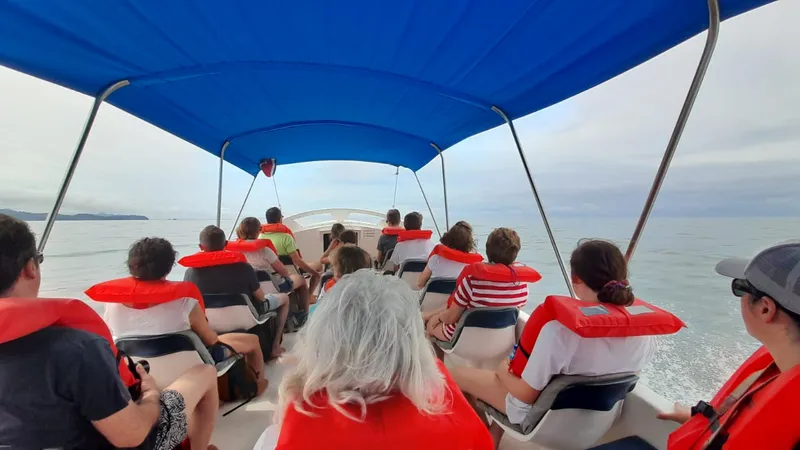
About This Activity
Up to 24h in advance — full refund
No upfront payment required
Boat tour inside Marino Ballena National Park
Bahía Ballena — one of the world's most reliable whale watching bays
Dolphin sightings typical throughout the bay year-round
Established operator with consistent track record
Check Live Availability & Prices
Real-time dates and prices — book directly, free cancellation up to 24 hours before.
You'll confirm the exact date and time on the secure booking page.
About Bahía Ballena — Why This Bay Matters
The Geography That Creates World-Class Whale Watching
Bahía Ballena — translated literally as Whale Bay — is a sheltered crescent bay on Costa Rica's South Pacific coast, enclosed within Marino Ballena National Park. The bay's protected waters and consistent upwelling of cold, nutrient-rich currents create a rich marine environment that functions as a feeding and breeding ground for humpback whales from two different ocean populations.
What makes Bahía Ballena exceptional is that the bay catches whale migrations from both the Northern and Southern Hemisphere. North Pacific humpbacks (feeding grounds: Alaska, Canada) arrive to breed and calve from July through October. South Pacific humpbacks (feeding grounds: Antarctica and southern Chile) arrive from December through April. The overlap period — particularly August and September — can produce simultaneous sightings of whales from both populations.
- Protected bay inside Marino Ballena National Park — strict approach rules enforced
- North Pacific humpbacks: July–October breeding season
- South Pacific humpbacks: December–April breeding season
- Peak overlap: August–September — highest whale density of the year
- Resident spinner and bottlenose dolphin populations year-round
What You'll See in the Bay
The tour covers the main whale zones in the middle and outer bay where humpbacks typically surface to breathe, rest, and engage in courtship behaviour. Beyond whales, the bay hosts large pods of spinner dolphins (often 50–200 individuals), bottlenose dolphins that frequently bowride the tour boats, sea turtles, and seabirds including frigatebirds and brown boobies. Flying fish are common near the whale zone — a phenomenon that surprises many guests.
- Humpback whales: surfacing, blowing, pectoral fin slaps, occasional full breaches
- Spinner dolphins: aerial spinning behaviour seen regularly in the outer bay
- Bottlenose dolphins: often approach the boat and bowride
- Olive ridley and leatherback sea turtles (year-round, not guaranteed)
- Flying fish, frigatebirds, brown pelicans, and osprey
What's Included & What's Not
Included at $95 per Person
- Guided boat tour inside Marino Ballena National Park
- Licensed naturalist guide on board
- National park entry fee
- Life jackets and safety equipment
- Basic refreshments (water)
Not Included
- Snorkeling equipment (not part of this tour)
- Meals or full catering beyond water
- Transport to/from Playa Uvita
- Underwater photography
- Gratuity for guides
Tour Itinerary
-
T+0 min
Check-In at Playa Uvita Dock
Meet the guide at the departure dock inside Marino Ballena National Park. Safety briefing covers life jacket use, boat conduct around whales, and what to look for on the water. The guide explains the SINAC-compliant approach rules: no engine noise within 100m, no vessel between a mother and calf.
-
T+10 min
Departure into Bahía Ballena
Boat departs the protected bay and moves toward the outer whale zone. Guides watch for blows — the mist column exhaled when a whale surfaces. The first sighting can happen anywhere from 10 minutes to 30 minutes into the tour depending on the day. The guide explains what each behaviour means as you watch.
-
T+30 min
Whale Zone — Main Observation
The boat positions alongside any active whales at the legally required distance. This is the longest section of the tour. You may observe the same whale for 10–25 minutes as it follows a surface-breathe-dive cycle. The guide narrates behaviour, identifies individual whales where possible, and explains the difference between a surface blow, a fluke dive, and a breach.
-
T+90 min
Dolphin Encounter and Secondary Zones
After the whale zone, the guide moves toward the areas where spinner dolphin pods are typically active. Spinner dolphins often approach the boat voluntarily — guides cut the engine and let the dolphins come to the vessel. A pod of 50–100 animals circling the boat is a typical occurrence.
-
T+150 min
Return to Playa Uvita
The boat returns along the outer bay edge. Secondary whale or dolphin sightings are common on the return route. Docking at Playa Uvita concludes the tour.
Important Things to Know
What to Bring
- Sunscreen (reef-safe mineral formula — chemical sunscreen not permitted in the park)
- Polarized sunglasses — reduces glare and makes spotting blows much easier
- Light, wind-resistant layer — the boat moves fast and ocean wind is cold even in tropical heat
- Seasickness medication if prone — take it 30–60 minutes before departure, not on the boat
- Binoculars if you have them — for spotting distant blows before the boat approaches
- Camera or phone in a waterproof case — spray is common at higher speeds
What's Not Allowed
- Chemical (oxybenzone-based) sunscreen — prohibited inside the national park
- Feeding any marine wildlife from the boat
- Attempting to touch or enter the water near whales or dolphins
- Flash photography aimed at whale eyes at close range
- Standing on the bow or gunwale without guide permission
Getting There
Who This Tour Is For — and Who Should Skip It
Best For
- First-time whale watchers who want a reliable, well-reviewed departure
- Couples and small groups wanting a complete Bahía Ballena experience (whales + dolphins)
- Travellers booking via Viator who prefer a single platform for all activities
- Guests who want flexibility — 148 reviews means multiple departure times and dates available
- Wildlife photographers who want the full bay experience rather than a dedicated single-species tour
Not Suitable For
- Guests with severe seasickness who cannot take preventive medication — the outer bay can be choppy in afternoon swells
- Guests wanting a purely humpback-focused experience without dolphin stops — see the dedicated humpback tour for that
- Visitors outside the July–October and December–April whale seasons who expect guaranteed whale sightings — dolphin sightings are likely year-round, but whales are seasonal
- Guests requiring mobility assistance — boarding the boat requires stepping onto a dock with some variance in height
Frequently Asked Questions
What is the best time of year for whale watching in Bahía Ballena?
Bahía Ballena has two whale seasons. North Pacific humpbacks arrive July–October; South Pacific humpbacks arrive December–April. The peak overlap period is August–September, when both populations can be in the bay simultaneously. For a detailed season-by-season breakdown, see our guide on when to go for whale watching in Uvita.
How many reviews does this tour have and on which platform?
This tour has 148 verified reviews on Viator, making it one of the most-reviewed whale watching options available through that platform for Uvita. If you prefer GetYourGuide, the most-booked whale and dolphin tour has over 600 reviews and covers the same Bahía Ballena waters.
Will I see both whales and dolphins on this tour?
Whale sightings depend on the season (July–October and December–April). Dolphin sightings — primarily spinner and bottlenose dolphins — are common year-round in Bahía Ballena. During peak whale season, it is typical to encounter both species on the same tour.
Is this a good tour for first-time whale watchers?
Yes. The 148-review track record indicates consistent sighting results and a reliable operation. First-timers who want the most-reviewed experience available should also consider the 600-review whale and dolphin tour for the highest booking confidence.
How does this compare to the other Uvita whale watching tours?
This is the main Viator-platform option for Bahía Ballena whale watching, which gives it a different booking interface and review base than GYG-listed tours. The marine area covered is identical — all tours operate inside Marino Ballena National Park. For a naturalist-led small-group tour, see the expert-guided humpback tour. For the lowest price, see the budget whale watching option.
What Travelers Say
We had three separate whale encounters on this tour — a mother and calf pair, a solitary male, and then a group of four near the mouth of the bay. The guide knew exactly where to position the boat and explained every surface behaviour as it happened. Absolutely worth it.
I was skeptical because I'd been on a whale watch in Cape Cod that produced nothing. Bahía Ballena is completely different — the whales are here because this is their breeding ground, not a migration corridor. We saw a full breach less than 50 metres from the boat. I was in tears.
The dolphin pod on the return leg was just as impressive as the whale. Easily 150 spinner dolphins coming from every direction, doing their spinning jumps right alongside us. My kids are still talking about it three weeks later.