Uvita Whale Watching Season — When to Go (Month-by-Month Guide)
Uvita has one of the longest whale watching seasons in the world because two separate populations of humpback whales use Bahía Ballena — one from the North Pacific, one from the South Pacific — and their combined presence covers most of the calendar year. This guide breaks down every month so you can plan your visit around peak whale activity rather than discovering the season calendar after you've already booked flights.
About This Tour
Up to 24h in advance — full refund
No upfront payment required
Guided whale watching in Bahía Ballena
July–October (North Pacific) and December–April (South Pacific)
Affordable departure with a meaningful review track record
One of the lowest-priced certified departures in Uvita
Check Live Availability & Prices
Real-time dates and prices — book directly, free cancellation up to 24 hours before.
Why Uvita Has Two Whale Seasons
The Two Humpback Populations
Humpback whales follow a predictable annual pattern: they feed in cold, nutrient-rich polar waters during summer, then migrate thousands of kilometres to warm tropical waters during winter to breed and give birth. Because the Northern and Southern Hemispheres have opposite seasons, two separate humpback populations time their migrations to arrive in the same tropical waters at different points in the calendar year.
Bahía Ballena sits at the convergence point of both migration routes. North Pacific humpbacks — which feed in the waters off Alaska, British Columbia, and the California coast — arrive in the South Pacific tropics between July and October to breed and calve. South Pacific humpbacks — which feed in Antarctic and sub-Antarctic waters off southern Chile and Argentina — arrive in the same Costa Rican waters between December and April.
This is why Uvita has one of the longest whale watching windows in the world: combining both seasons, whales are present in Bahía Ballena for approximately 8 months of the year.
- North Pacific humpbacks: feed in Alaska/BC/California; breed in Costa Rica July–October
- South Pacific humpbacks: feed near Antarctica; breed in Costa Rica December–April
- Both populations use the same Bahía Ballena waters — not different locations
- August–September overlap: both populations present simultaneously
Month-by-Month Whale Watching Calendar
January and February — South Pacific Season: Active
The South Pacific humpback season is well underway. January and February are strong months for whale watching with this population — adults engaging in competitive mating groups (male competitors surrounding a single female) are common, and mother-calf pairs from the previous season's births are still present in the bay. Ocean conditions in January and February are generally calm — the dry season is beginning along Costa Rica's Pacific coast, and seas are typically flat in the morning.
- South Pacific humpbacks: active and numerous
- Competitive pods (male-female-escort groups): common
- Mother-calf pairs from November–December births still present
- Whale season rating: ★★★★☆ (4/5)
- Ocean conditions: calm — early dry season
March and April — South Pacific Season: Late but Still Active
March is one of the last reliable months for South Pacific humpback whale watching in Uvita. The population begins departing in April as water temperatures shift and the migration south toward Antarctic feeding grounds begins. Early March still offers good sighting rates; by late April, encounter frequency drops noticeably.
Dolphin sightings remain excellent regardless of whale season.
- March: South Pacific humpbacks still active — good sighting rates
- April: population begins migrating south — declining frequency
- Whale season rating for March: ★★★★☆ (4/5)
- Whale season rating for April: ★★★☆☆ (3/5)
- Dolphin sightings: excellent year-round regardless of season
May and June — Transition Gap
May and June represent the gap between the two whale seasons. The South Pacific population has departed, and the North Pacific population has not yet arrived. Whale sightings in May and June are possible — occasional humpbacks are observed in Bahía Ballena outside the main seasons — but should not be expected.
These months are better treated as dolphin watching months. Spinner and bottlenose dolphin encounters are excellent during the transition period, and sea turtle activity increases.
- May: South Pacific humpbacks mostly gone — occasional stragglers only
- June: lowest whale activity of the year in Uvita
- Whale season rating: ★★☆☆☆ (2/5) — manage expectations
- Dolphin sightings: excellent — this is the right time for a dolphin-focused tour
- Sea turtles: olive ridley nesting season begins on nearby beaches
July and August — North Pacific Season: Peak
July marks the arrival of North Pacific humpbacks in Bahía Ballena — and with their arrival, Uvita's most spectacular whale watching period begins. July sees increasing numbers of North Pacific humpbacks entering the bay, with sighting rates rising week by week through the month. By August, both the North Pacific season is at full strength AND the final South Pacific individuals may still be present — creating the highest density of humpbacks in the entire year.
August is statistically the single best month for whale watching in Uvita. The bay can hold significant numbers of whales simultaneously, with multiple sightings in a single 2–3 hour tour being common rather than exceptional. Competitive mating behaviour — large groups of male whales competing for females, producing dramatic surface aggression — peaks in August.
- July: North Pacific humpbacks arriving — sighting rates climbing rapidly
- August: PEAK month — highest whale density of the year
- Overlap possible: North Pacific + remaining South Pacific individuals
- Competitive mating pods: dramatic surface behaviour with multiple males
- Whale season rating: July ★★★★☆ / August ★★★★★ (5/5)
September and October — North Pacific Season: Excellent
September continues the peak North Pacific season with no significant drop in activity from August. Mother-calf pairs are particularly prominent in September as calves born in July and August become more mobile and visible at the surface. September is an especially good month for calf sightings — young humpbacks are more surface-active and more likely to engage in playful behaviour near the boat than older individuals.
October is the final month of the North Pacific season. Sighting rates remain very good through mid-October, then begin declining as the population starts the long migration back to northern feeding grounds. Book October departures for early-to-mid month if possible.
- September: excellent — mother-calf pairs and calves very active
- September: calves born this season now large enough to be highly visible
- October (early): good sighting rates — North Pacific season still active
- October (late): declining frequency as population begins migration north
- Whale season rating: September ★★★★★ / October ★★★★☆ (4/5)
November and December — Transition and Return
November is the second quiet month in Uvita's whale calendar. The North Pacific population has mostly departed, and the South Pacific population has not yet arrived. Occasional humpback sightings do occur in November, but consistency is low — treat it as a dolphin month.
December brings the return of South Pacific humpbacks, typically arriving in the second half of the month. By late December, sighting rates are rising toward the January–February peak.
- November: second gap period — low whale activity, dolphin tours recommended
- December (early): South Pacific humpbacks beginning to arrive
- December (late): sighting rates improving week by week
- Whale season rating: November ★★☆☆☆ / December ★★★☆☆ (3/5)
- Christmas and New Year weeks: South Pacific season building — good timing
What's Included in This Tour
Included at $93 per Person
- Guided whale watching boat tour inside Marino Ballena National Park
- Naturalist guide on board throughout
- National park entry fee
- Life jackets and safety equipment
- Water on board
Not Included
- Snacks or meal service
- Underwater photography
- Transport to/from Playa Uvita
- Gratuity
What Happens on the Tour
-
T+0 min
Dock Briefing at Playa Uvita
Safety briefing inside Marino Ballena National Park. Guide explains what whales are typically in the bay at this time of year, what to look for on the water, and the SINAC approach regulations all licensed operators follow.
-
T+15 min
Departure and Transit
Boat departs Playa Uvita and moves toward the outer bay. The guide scans for surface blows during the transit. Dolphin activity is often observed in the inner bay margins on the outward run.
-
T+30 min
Primary Wildlife Observation Zone
The guide positions the boat in the outer bay search zone and tracks any active whales or dolphin pods. During peak season (August–September), multiple independent sightings in this zone are common within a single tour. The guide narrates all observable behaviours in real time.
-
T+90 min
Secondary Zone Coverage
Boat moves to secondary whale or dolphin zones. Sea turtles and seabirds including frigatebirds and brown pelicans are observed during transit. The guide discusses the seasonal dynamics of the bay — which population is currently present and what behaviours to expect at this point in the season.
-
T+150 min
Return to Playa Uvita
Return to the dock. Questions answered. Guide shares recommendations for the best time of year to return and which months produce specific behaviours (calves, competitive pods, breaching).
Important Things to Know
What to Bring
- Reef-safe mineral sunscreen — chemical sunscreen is prohibited inside the national park
- Polarized sunglasses — makes it much easier to spot distant surface blows
- Motion sickness medication if needed — take 30–60 minutes before boarding
- Binoculars — for spotting blows at distance before the boat approaches
- Light windproof layer — the boat creates significant wind chill at cruising speed
- Waterproof case for camera or phone — sea spray is routine
What's Not Allowed
- Chemical sunscreen (oxybenzone-based) in the national park
- Entering the water near whales or dolphins
- Feeding any marine wildlife
- Approaching individual whales more closely than the guide-specified distance
- Flash photography directed at whale eyes
Getting There
Who This Tour Is For — and Who Should Skip It
Best For
- Travellers who have flexibility in their travel dates and want to use this season guide to plan around peak whale activity
- Budget-conscious guests who want a certified national park departure with a meaningful review track record at under $100
- Repeat visitors to Costa Rica who have done other wildlife tours and now specifically want to time a visit for whale season
- Photographers planning a dedicated whale photography trip — this guide will help you pick August or September for maximum sighting frequency
- Families and couples who want to understand what to expect before committing to a tour date
Not Suitable For
- Guests visiting in May, June, or November who have immovable travel dates and expect to see humpbacks — dolphin watching is the more realistic expectation in the gap months
- Travellers who want the highest-rated guide experience — the 4.0-star rating is the lowest among the tours we list; the expert naturalist tour at $96 has a 4.7-star rating and specialist cetacean guide
- Guests prone to seasickness on longer boat tours — the cruise-style comfort boat is a better vessel option
- Wildlife photographers who need precise boat positioning relative to whales — consider the dedicated humpback tour for a more focused, smaller-group experience
Frequently Asked Questions
What is the absolute best month to go whale watching in Uvita?
August and September are consistently the best months. North Pacific humpbacks are at peak numbers throughout both months, and August can still carry overlap with the last South Pacific individuals. September is particularly good for mother-calf pairs — calves born earlier in the season are large enough to be highly active and visible at the surface.
Can I see humpback whales year-round in Uvita?
Whale sightings are possible year-round, but consistent sightings are concentrated in two windows: July–October (North Pacific humpbacks) and December–April (South Pacific humpbacks). The gap months — May, June, and November — have much lower whale activity. Dolphin sightings from resident spinner and bottlenose populations are year-round and reliable throughout all months.
Do North Pacific and South Pacific humpbacks look different?
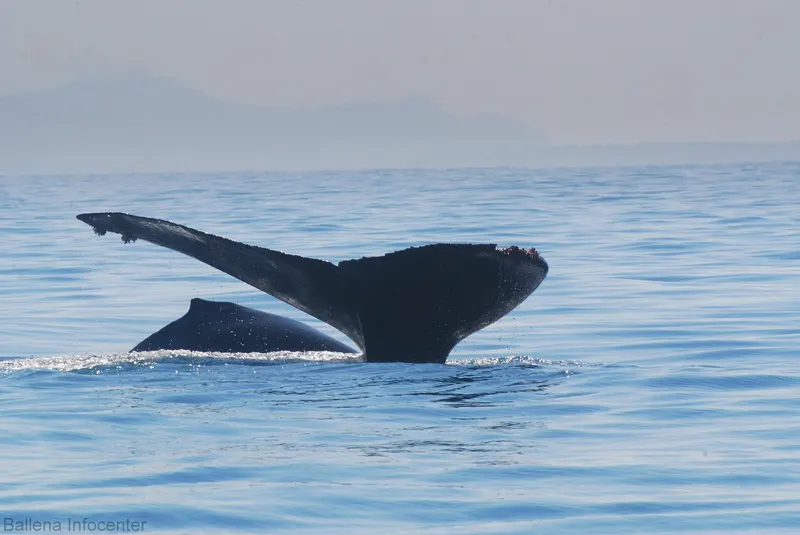
Yes, subtly. North Pacific humpbacks generally have darker undersides on their flukes and pectoral fins. South Pacific humpbacks tend to have more white on these surfaces. Both populations engage in similar surface behaviours — breaching, tail lobbing, pectoral fin slapping. Experienced guides in Uvita can identify individual whales by their unique fluke pigmentation patterns, which function like fingerprints.
Is August or September better for whale watching?
Both are excellent. August tends to produce more competitive mating behaviour — large groups of males competing for a single female, with dramatic surface aggression. September is better for calm mother-calf encounters — calves born in July and August are large enough to be active and playful. For dramatic action shots, book August. For peaceful close encounters with calves, book September.
What other whale watching tours do you recommend for different budgets?
For the most-reviewed experience at $95, the whale and dolphin tour with drinks and snacks has over 600 reviews. For the highest-rated naturalist experience at $96, the expert-guided humpback tour is rated 4.7 stars. For humpback-only photography and behaviour study, the dedicated humpback tour at $133 is the top choice. For the lowest price at $92, the budget option in Bahía Ballena covers the same park waters.
What Travelers Say
I timed my whole Costa Rica trip around this guide and visited in September specifically for the mother-calf pairs. We saw a calf breach repeatedly while its mother rested nearby — one of the most moving wildlife moments I've experienced in 20 years of travel.
My tour in August was incredible — the guide said we encountered a competitive mating group, three males escorting a female. The surface activity was constant for almost an hour. The $93 price point made it easy to say yes without overthinking it.
We came in January for the South Pacific season and were not disappointed. Two humpbacks surfaced so close to the boat that we could hear the exhale. The guide explained the difference between the two whale populations and how Uvita is unique in the world for hosting both. Completely captivating.