Humpback Whale Watching in Uvita — Dedicated Humpback Tour Review (2026)
Most whale watching tours in Uvita combine humpback whale observation with dolphin encounters — which is a wonderful experience, but means the boat often leaves the whale zone to follow a dolphin pod. This tour is different: it focuses exclusively on humpback whale behaviour, stays in the whale zone throughout the tour, and is designed for wildlife observers and photographers who want more time studying individual whales rather than a general marine wildlife overview. Here is the complete review.
About This Activity
Up to 24h in advance — full refund
No upfront payment required
Exclusively focused on humpback whale observation
No dolphin detours — stays in the whale zone throughout
Designed for extended observation of individual whale behaviour
Highest price in Uvita — reflects dedicated wildlife focus
Check Live Availability & Prices
Real-time dates and prices — book directly, free cancellation up to 24 hours before.
Understanding Humpback Whale Behaviour in Bahía Ballena
Why Humpbacks Come to Uvita
Humpback whales are the largest migrating mammals on earth. They spend their summer months in cold polar waters — Alaska, British Columbia, and Antarctic feeding grounds — consuming up to 1.5 tonnes of krill and small fish per day. As water temperatures shift at the end of summer, they migrate to warm tropical breeding grounds where they mate, give birth, and nurse calves — without eating for the entire 3–4 month stay.
Bahía Ballena provides exactly what humpbacks need: warm, sheltered water, sufficient depth for long dives, and a geography that concentrates animals in a manageable bay. Two populations use this bay in rotation — North Pacific humpbacks from July to October, South Pacific humpbacks from December to April — making Uvita one of the longest-season humpback destinations in the world.
- Humpbacks migrate from polar feeding grounds to tropical breeding grounds annually
- They do not eat during their time in Uvita — energy comes from stored blubber
- Bahía Ballena sheltered bay creates natural concentration of animals
- Two populations: North Pacific (July–October) and South Pacific (December–April)
- Uvita is one of the few places in the world where both populations use the same bay
Surface Behaviours: What You'll Observe
Humpback whales are the most acrobatic of the great whales, and their surface behaviours are among the most spectacular in the animal kingdom. This dedicated tour remains in the whale zone long enough to observe multiple behaviour types from the same individuals — something that a general whale-and-dolphin tour, which must balance time between species, rarely achieves.
The guide identifies each behaviour by name and explains its likely function as it occurs. Understanding what you are watching — not just pointing at the splash — is the core of what separates this tour from general wildlife sightseeing.
- Breaching: the whale launches its entire body out of the water, rotating midair. The most dramatic behaviour; associated with communication, parasite removal, or play
- Tail lobbing (lobtailing): the whale raises its flukes above the surface and slaps the water. Creates a loud crack audible from hundreds of metres. Likely a communication signal
- Pectoral fin slapping: the whale rolls onto its side and repeatedly slaps one of its 4–5 metre pectoral fins against the surface. Common during courtship and social interaction
- Spyhopping: the whale rises vertically out of the water with its head and part of its body visible, appearing to look around. Thought to be visual orientation or social signalling
- Fluking: raising the tail flukes above the surface before a deep dive. The unique pigmentation pattern on each whale's fluke is used for individual identification
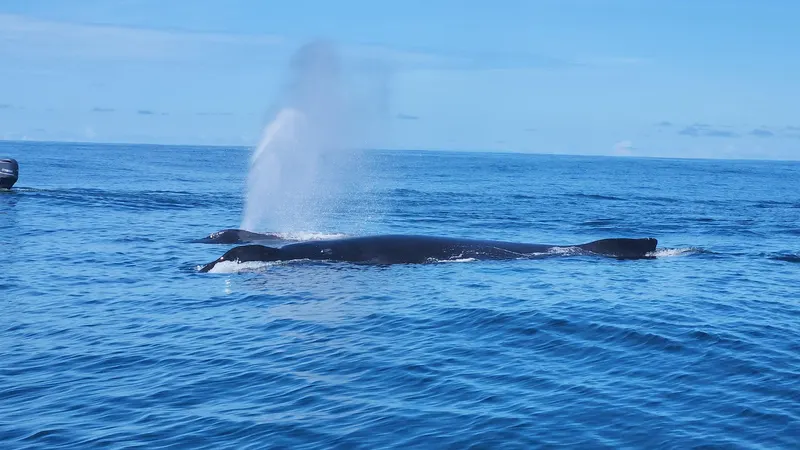
- Surface blow: the exhalation column when the whale breathes. Humpback blows are bushy and up to 3 metres tall — visible from kilometres away
Individual Whale Identification
Humpback whales can be individually identified by the unique pigmentation patterns on the underside of their tail flukes — similar to a human fingerprint. Uvita-based guides maintain photo-ID catalogues of regularly-returning individuals and can often identify known whales during the tour. Seeing a whale that has been documented returning to the same bay over multiple years is a genuinely remarkable experience that this dedicated format provides time for.
- Each whale's fluke underside has a unique pigmentation pattern
- Guides photograph flukes during dive sequences for individual ID
- Some individuals return to Bahía Ballena in successive years
- Recognising a returning individual (given a name in the local catalogue) is a special moment
- You can sometimes request to see the guide's photo-ID catalogue after the tour
Why This Tour Is Different from Standard Whale Watching
No Dolphin Detours — Full Time in the Whale Zone
On a combined whale-and-dolphin tour, the guide must balance the group's time between species. When a dolphin pod appears near the boat — as frequently happens in Bahía Ballena — many guests want to follow the dolphins, and the boat moves away from the active whale zone. This is understandable on a general tour, but frustrating if your primary interest is studying humpback behaviour.
This dedicated humpback tour operates with a single priority: whales. If dolphins appear near the boat, the guide notes them and may slow to observe briefly, but the vessel does not leave the whale zone to follow a dolphin pod. All 2–3 hours of the tour are allocated to humpback observation.
- No redirection to dolphin pods once a whale is located
- All tour time allocated to humpback whale observation
- Guides stay with individual whales through multiple surface-breathe-dive cycles
- Time enough to observe multiple distinct behaviour types from the same individual
Who This Tour Is Built For
The dedicated humpback format is built for a specific kind of visitor: wildlife observers, marine photographers, naturalists, and anyone who has done general whale watching before and wants to go deeper. It is not the right tour for guests who want variety — if you want dolphins, sea turtles, flying fish, and a general sense of the marine life in Bahía Ballena, the general whale-and-dolphin tours deliver that better and at lower cost.
At $133 per person, this is the premium-priced tour in Uvita. That price reflects the dedicated single-species focus, the patience required from the guide to stay with individual animals, and the smaller group cap that prevents the boat from becoming crowded around a whale.
- Wildlife and nature photographers needing extended stable observation time
- Marine naturalists who want to observe full surface behaviour sequences
- Whale watching enthusiasts who have done general tours before
- Anyone who has read about humpback behaviour and wants to see it systematically
- Guests willing to pay premium for quality of experience over variety
What's Included & What's Not
Included at $133 per Person
- Dedicated humpback whale observation tour in Marino Ballena National Park
- Expert guide with specialist cetacean knowledge
- National park entrance fee
- Life jackets and safety equipment
- Water on board
Not Included
- Underwater photography or video
- Meals or snack service
- Transport to Playa Uvita
- Gratuity for guides
- Dolphin encounters (this is explicitly not a dolphin tour)
Tour Itinerary
-
T+0 min
Pre-Departure Briefing at Playa Uvita
Detailed pre-departure briefing covering: the surface behaviour types you may observe, what each behaviour likely means, how to photograph flukes for individual identification, and the SINAC approach regulations. The guide explains the tour format — humpback focus, extended observation periods, no species-switching — so guests arrive in the whale zone with the right expectations and skills to make the most of the time.
-
T+15 min
Transit to the Outer Whale Zone
Boat departs Playa Uvita and crosses Bahía Ballena toward the outer zone where humpback activity is typically concentrated. The guide scans for surface blows during the crossing, spotting the mist column of a surfacing whale from up to 3km away on calm days. The boat moves directly to any active blow sighted.
-
T+30 min
First Whale Encounter — Extended Observation
Once a whale is located, the guide cuts engine speed and positions the vessel at the required approach distance. The group observes the full surface sequence: 3–7 breaths spaced 15–20 seconds apart, then a deep dive lasting 5–15 minutes, followed by resurfacing and another breath sequence. The guide narrates each phase and photographs the fluke pattern on each deep dive for individual identification.
-
T+75 min
Secondary Whale Search
After the first extended observation, the guide searches for additional individuals or groups. During peak season (August–September), multiple independent whales or competitive pods may be located within a short transit. Each encounter follows the same dedicated observation format — the boat stays with the whale through multiple dive cycles rather than moving on after one or two observations.
-
T+150 min
Return — Debrief and Fluke ID Review
Return to Playa Uvita. The guide shares the fluke photographs from the tour and identifies any individually catalogued animals sighted. Discussion of the behaviours observed — what each indicated and whether they are typical for the current season and population. Guests can request copies of fluke photographs for their own records.
Important Things to Know
What to Bring
- Camera with a telephoto or zoom lens — even at the minimum legal approach distance, a longer lens makes a significant difference to photo quality
- Extra memory cards and a fully charged battery — extended whale observation generates many shots
- Reef-safe mineral sunscreen — chemical sunscreen prohibited inside Marino Ballena National Park
- Polarized sunglasses — reduces glare and makes tracking whale surface blow plumes much easier
- Motion sickness medication if prone — take 30–60 minutes before departure
- Light windproof layer — the boat creates significant wind chill at cruising speed
- Waterproof bag for camera gear — sea spray is common
What's Not Allowed
- Chemical sunscreen (oxybenzone-based) — prohibited by the national park
- Entering the water near whales — strictly prohibited under SINAC regulations with serious penalties
- Approaching whales more closely than the guide-specified minimum distance (100 metres while engine is running)
- Making loud noise or sudden movements when the boat is within visual range of whales
- Flash photography when positioned very close to a whale's head
- Attempting to call or attract whales using any sound devices
Getting There
Who This Tour Is For — and Who Should Skip It
Best For
- Wildlife photographers who need extended stable observation time with individual whales to get quality shots
- Marine naturalists, biologists, and serious nature enthusiasts who want to observe humpback behaviour systematically rather than casually
- Guests who have already done a general whale-and-dolphin tour and want to go deeper into humpback observation specifically
- Visitors during peak season (August–September) who want maximum time in the whale zone rather than splits between species
- Anyone who has read about humpback behaviour — breaching, competitive pods, mother-calf dynamics — and wants to see it with full guide narration
Not Suitable For
- Guests who want a varied marine wildlife experience including dolphin encounters — the dolphins and whales tour delivers more species variety at lower cost
- Budget-conscious travellers — at $133 this is the most expensive tour in Uvita; the budget option at $92 covers the same marine park zone
- First-time whale watchers who have no baseline experience and may not fully appreciate the focused format — the most-booked tour at $95 is a better introduction
- Guests visiting outside whale season (May–June and November) — no humpbacks are reliably present; this tour should only be booked July–October or December–April
- Anyone prone to severe seasickness — the dedicated whale zone is in the outer bay where swells are larger
Frequently Asked Questions
What is the difference between this tour and the standard whale watching tours?
This is the only tour in Uvita that maintains a strictly humpback-only focus throughout the entire session. General tours — including the most-booked tour at $95 and the Bahía Ballena 148-review tour — combine whale and dolphin watching and will redirect to dolphin pods when they appear. This tour stays in the whale zone for the full 2–3 hours, allowing extended observation of individual animals.
Is it worth paying $133 instead of $92–$95?
It depends what you want. If variety (whales + dolphins + sea turtles + general bay experience) is the goal, the $92–$95 tours deliver that better value. If seeing humpback whale behaviour in depth — including multiple behaviour types from the same individual, and guide narration explaining each — is the goal, the $133 dedicated format is worth it. Wildlife photographers in particular consistently find the extended observation time essential.
Will I see a humpback whale breach on this tour?
Breaching cannot be guaranteed on any tour — whales breach on their own schedule. However, this tour is specifically designed to maximise the time spent in proximity to active individuals, which increases the probability of observing breaching behaviour compared to tours that divide time between species. August and September — peak competitive mating season — are the months when breaching is most commonly observed in Bahía Ballena.
What months should I book this tour for the best humpback sightings?
August and September are the peak months for humpback whale density in Uvita — the overlap of the North Pacific season (July–October) with the final South Pacific individuals, combined with peak competitive mating activity, makes August–September the best two months for dedicated humpback observation. For a full season breakdown see our whale watching season guide.
Can I do this tour if I've never seen a whale before?
Technically yes, but you'll get more from it if you come with some background knowledge of humpback behaviour — what different surface actions mean, what to look for in a dive sequence, how individual identification works. First-time whale watchers typically get more out of the naturalist-guided tour at $96 or the popular 600-review tour at $95, which offer a broader introduction to the bay's marine life before diving deep into a single species.
What Travelers Say
I've done whale watching in Iceland, the Azores, and Baja California. This tour is different because the guide actually stays with the whale. On every other trip the boat moves on after one or two surfaces. Here we tracked a single male for over 45 minutes and observed five different behaviour types. The fluke ID at the end was the icing on the cake.
As a wildlife photographer this was exactly what I needed. No sudden redirects to dolphins, no competing priorities — just me, the guide, and a humpback at an ethical distance for long enough to get clean shots of a full breach sequence. I got the images I came to Costa Rica for.
We upgraded from the standard tour after reading about the dedicated format and it was absolutely the right call for us. We watched a mother calf pair for nearly an hour. The calf was doing small surface rolls next to the mother the whole time. No dolphin pod could have competed with that.