Whale Watching Cruise in Uvita — Spacious Comfort Boat Review (2026)
Most whale watching boats in Uvita are rigid inflatable boats (RIBs) — fast and agile but low to the water, with bench seating and a bouncy ride in choppy conditions. This tour uses a wider, more stable cruise-style vessel with proper seating, a lower boarding step, and significantly more deck space. At $114 it is the most expensive option in the bay. Here is whether the extra comfort is worth it.
About This Activity
Up to 24 hours in advance — full refund
No upfront payment required
Full Bahía Ballena whale watching circuit
Wider, more stable, more spacious than RIB boats
Accessible for elderly guests and young children
Consistent rating from 25 guests
Check Live Availability & Prices
Real-time dates and prices — book directly, free cancellation up to 24 hours before.
RIB Boat vs. Cruise Vessel — The Real Difference
What Most Uvita Tours Use: RIB Boats
The majority of whale watching departures in Uvita use rigid inflatable boats — RIBs. These are fast, manoeuvrable, and efficient for covering the Bahía Ballena whale zone quickly. In calm morning conditions, a RIB is a perfectly comfortable platform for whale watching.
The limitations appear when conditions change: a RIB sits low in the water, offers bench seating with no back support, and transmits ocean chop directly through the hull. For guests with back problems, for elderly travellers, for anyone prone to seasickness, or for parents with young children who need to keep their footing safely, a RIB in 2-foot chop can be genuinely uncomfortable.
- RIBs: fast, manoeuvrable, bench seating with no back support
- Low in the water — ocean chop transmitted directly to passengers
- High boarding step from dock — requires stepping down onto an inflatable tube
- Adequate in calm conditions; uncomfortable in choppy afternoons
What This Tour Uses: Cruise-Style Vessel
This tour operates a wider, more stable vessel — a purpose-built passenger boat rather than an inflatable. The differences matter in practice:
The deck is higher and more stable, reducing pitch and roll in chop. Seating is proper passenger seating with backrests, not bench planks. The boarding height from the dock is lower — no step down onto an inflatable tube, which is the point where elderly guests and small children most often struggle on RIB departures. Deck space is genuinely wider, allowing passengers to move to different viewing positions without crowding.
At $114 vs $92–$96, you are paying approximately $18–$22 per person for this comfort difference.
- Higher, more stable deck — less pitch and roll in choppy conditions
- Proper passenger seating with backrests
- Lower boarding step — significantly more accessible for seniors and children
- Wider deck — space to move for photographs without elbowing
Who Benefits Most from the Comfort Vessel
Families with Young Children
Young children on a RIB require constant parental supervision — the inflatable sides are not the same as a solid rail. On the cruise vessel, the solid hull, higher rails, and more stable platform reduce the anxiety for parents with children under 8. The lower boarding step also means carrying a small child onto the boat does not require an awkward climb over an inflatable tube.
- Solid hull and higher rails — more secure for young children
- Lower boarding step eliminates the awkward climb with a child in arms
- More stable platform means less risk of a child losing balance in chop
- More deck space to move without crowding around children
Elderly Guests and Guests with Mobility Limitations
Boarding a RIB at Playa Uvita requires stepping down from the dock onto an inflatable tube, then stepping again into the boat interior — a movement that requires confident balance and reasonable knee flexibility. For guests with joint problems, mobility aids, or balance concerns, this is the point where RIB tours become problematic.
The cruise vessel boards from a lower, solid step — much closer to simply walking onto the boat. For elderly guests this is the single most important practical difference between a comfortable and an uncomfortable departure.
- Lower boarding height — closer to walking onto the boat than stepping down
- No inflatable tube to navigate — solid hull boarding
- More stable underway — less physical bracing required during transit
- Back-supported seating — relevant for guests with lumbar or spine issues
Guests Prone to Seasickness
The most common trigger for seasickness on whale watching tours is excessive vessel movement combined with confined, low seating. The cruise vessel's greater beam (width) reduces roll in side swells; its higher deck position gives guests a better visual horizon reference, which reduces vestibular disorientation; and its proper seating means guests are not hunched on a bench. None of these eliminate seasickness risk, but they meaningfully reduce it compared to a low-slung RIB.
- Greater beam (width) reduces roll in side swells
- Higher deck gives better visual horizon reference — reduces disorientation
- Proper seating reduces the hunched posture that worsens nausea
- Take any medication 30 minutes before boarding regardless of vessel choice
What's Included & What's Not
Included in the $114 Price
- 2–3 hour whale watching cruise in Marino Ballena National Park
- Cruise-style vessel with passenger seating and wider deck
- Experienced bilingual guide
- Life jackets and all safety equipment
- National park entry fee
Not Included
- Drinks and snacks — bring water and a light snack for a 3-hour outing
- Hotel pickup and drop-off — self-transport to Playa Uvita dock
- Photography or video — bring your own waterproof camera
- Gratuity
Tour Itinerary
-
T+0 min
Boarding at Playa Uvita Dock
Meet at the Playa Uvita dock. The lower boarding step is immediately apparent for guests who have previously boarded RIB boats. Safety briefing on the boat — guide explains what to expect, where to stand for photographs, and how to spot whale blows on the horizon.
-
T+15 min
Smooth Transit Into Bahía Ballena
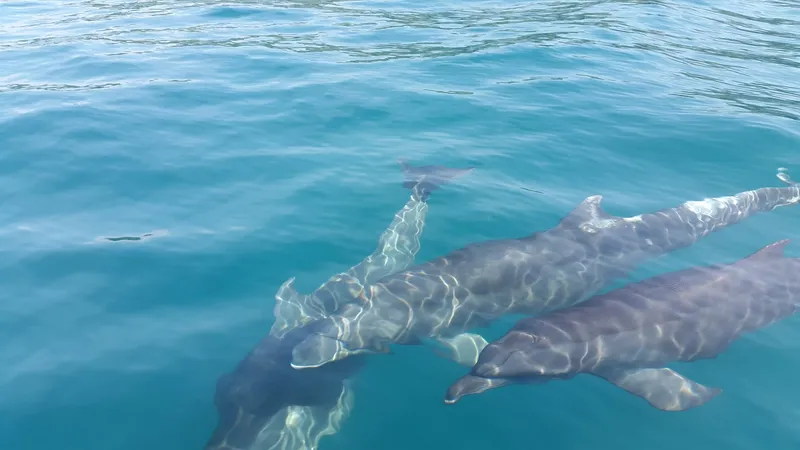
Cruise vessel departs into the bay. The wider hull and passenger-rated vessel maintains a more stable platform than RIBs even at transit speed. Guide and crew scan the horizon. Spinner dolphins often first encountered on this initial transit.
-
T+30–40 min
Whale Encounter Zone
Upon locating a whale blow, the boat approaches following SINAC-regulated distances and cuts the engine at 50 meters. The wider deck means passengers can move to either side without crowding for the best viewing angle. Guide narrates the encounter.
-
T+90 min
Dolphin and Bay Exploration
After primary whale encounters, the cruise makes a pass along the dolphin-active bay edge. Spinner and bottlenose dolphins frequently sighted here. The vessel's stability is particularly appreciated in this section where the guide encourages passengers to stand for a better view.
-
T+130–150 min
Return to Playa Uvita
Smooth return to dock. Guide answers questions about the marine park, sightings of the day, and the best snorkeling and hiking options inside the park after the tour. Disembarking from the low step is straightforward.
Important Things to Know
What to Bring
- Water — 1.5 litres per person; no drinks included despite the premium price
- Light snack — morning departures can finish past a standard breakfast window
- Reef-safe mineral sunscreen — required inside Marino Ballena National Park
- Seasickness medication if prone — take 30 minutes before boarding, not after symptoms start
- Camera — the wider deck and more stable platform make photography more comfortable than on a RIB
What's Not Allowed
- Chemical (oxybenzone) sunscreen inside the national park
- Noise during whale observation — the guide signals quiet time during encounters
- Standing on rails or exterior surfaces while underway
- Feeding or attempting to touch any wildlife — dolphins, turtles, or whales
- Plastic single-use bottles — bring a reusable container
Getting There
Who This Tour Is For — and Who Should Skip It
Best For
- Families with children under 8 where boarding safety and deck space matter
- Elderly guests or guests with mobility limitations for whom the lower boarding step is critical
- Anyone prone to seasickness who wants every reasonable advantage over open-ocean motion
- Guests with back or joint issues for whom bench seating on a bouncy RIB is uncomfortable
- Groups where the extra $20 per person is less important than everyone having a comfortable experience
Not Suitable For
- Solo travelers or couples on a strict budget — the $22 premium over the cheapest option is meaningful; see best value whale watching instead
- Guests who want the specialist naturalist guide — see the expert-guided humpback whale tour for cetacean behaviour expertise
- Guests who want drinks and snacks included — even at $114, refreshments are not included; see the $95 tour with drinks and snacks
- Adrenaline seekers who prefer the fast, wind-in-face RIB experience — this is a steady, comfortable cruise
Frequently Asked Questions
Is the cruise vessel still good for whale watching or does it sacrifice agility?
The whale watching quality is equivalent — all licensed operators access the same SINAC-regulated zones in Bahía Ballena and follow the same approach distance rules. A RIB is faster between locations but cannot approach a whale differently than a cruise vessel. The difference is entirely in passenger comfort, not wildlife encounter quality.
Why is this tour more expensive than others if the whale zone is the same?
The $114 price reflects the higher operating cost of a cruise-style passenger vessel compared to a RIB. Fuel, maintenance, crew capacity, and dock access fees are all higher for a larger vessel. You are paying for vessel comfort — not for a better whale or a different part of the ocean.
My elderly parent has limited mobility — will they manage the boarding?
This is specifically the tour I recommend for guests with mobility limitations. The lower boarding step and solid hull eliminate the most difficult part of RIB boarding — stepping down onto an inflatable surface. If your parent uses a walking aid, notify the operator when booking so crew can prepare assistance at the dock.
Can I see humpback whales year-round in Uvita?
Uvita has two humpback seasons: July–November (Northern Hemisphere migrants) and December–April (Southern Hemisphere migrants). Outside these windows, whale sighting rates drop significantly — though spinner and bottlenose dolphins are present year-round. The complete Uvita whale watching season guide covers every month.
Should I book this tour or the SINAC-certified option at the same price?
At $95 vs $114, they serve different priorities. The SINAC-certified tour prioritises responsible wildlife conduct and conservation certification. This tour prioritises physical comfort — vessel stability, boarding accessibility, and deck space. If comfort is the driving factor (elderly guests, young children, motion sensitivity), book this one.
What Travelers Say
My mother is 74 and was nervous about getting onto a boat after a bad experience on a speedboat tour in Thailand. Boarding this vessel was exactly like walking onto a ferry — one small step and you're on. She relaxed immediately and ended up standing at the rail the whole trip watching the dolphins.
I get seasick easily and have avoided whale watching tours for years because of it. Took my medication and chose this boat specifically for the stability. We hit some chop on the return and I felt completely fine — the wider hull makes a real difference. Saw a mother and calf, which made the decision completely worthwhile.
Came with two kids aged 5 and 8. The boat was spacious enough that they could move around safely and the guide was great with them — pointed out the dolphins first because they came right to the bow. No worrying about them losing their balance on a narrow inflatable. Would book this one again.